The Exiled Mountie’s Guide to Living in Mérida
A practical, first-hand look at what it takes to build a life in Mexico.

How much does it really cost to live in Mexico these days?
It is one of the first questions people ask when they begin seriously considering a move south. It is also one of the hardest to answer. Mexico is a vast country, and the cost of living can vary dramatically depending on the city, neighbourhood, household, and standard of living being measured.
Moreover, cost of living is only one part of the decision. Climate, safety, neighbourhoods, healthcare, and the practical realities of settling in will all influence whether a place is right for you.
To make the question more meaningful, I am going to examine the city I call home: Mérida, Yucatán.
This article began as a straightforward examination of what it costs to live in Mérida. But as I worked through the subject, it became obvious that the numbers alone could not tell the full story. The question of whether you can afford to live somewhere is closely tied to the question of whether you would actually want to live there.
In this opening instalment, I will look at what daily life in Mérida is actually like, including its climate, safety, neighbourhoods, mobility, community, and some of the practical realities of living here. Future articles will examine cost of living, healthcare, residency, housing, buying a car, and other parts of establishing yourself in Mexico.
By the end of the series, I hope to give you a clear picture of what Mérida offers and a more grounded sense of what building a life in Mexico can actually look like.
Could You Build a Life in Mérida?
Climate, safety, neighbourhoods, mobility, community, and the realities of everyday life.
Mérida in Brief
Mérida is the capital of the state of Yucatán and the principal urban centre of the peninsula’s northwest. The city sits inland, roughly 35 kilometres from the Gulf coast, with the port town of Progreso serving as the nearest major coastal community.
The population figure depends on where you draw the line. Mérida itself blends steadily into the surrounding municipalities, making it difficult to say exactly where the city ends and the wider metropolitan area begins. In practical terms, Mérida feels less like a compact colonial city than a sprawling regional capital built around two very different urban worlds.
The historic centre and older barrios contain much of the architecture and street life most visitors associate with Mérida. Much of the city’s newer growth has moved north, where modern services, gated communities, and commercial development have become concentrated.
Mérida is culturally distinct from much of Mexico. Yucatecan food, language, architecture, and Maya heritage are highly visible, and the city has a strong local identity of its own. At the same time, it has attracted Mexicans from other states, foreign retirees, remote workers, and families looking for a quieter alternative to the country’s largest cities.
It is large enough to offer major hospitals, extensive shopping, an international airport, and most of the services needed for everyday life. Yet it remains far less overwhelming than Mexico City, Guadalajara, or Monterrey. That intermediate scale is what makes it attractive as a home base: it provides the infrastructure of a major urban centre without entirely losing the pace and character of a smaller regional city.
Climate
Mérida has a tropical climate, and for a Canadian exile, it is not an easy one to adjust to. The city is brutally hot and brutally humid for most of the year. And when I say brutally, I mean it in every sense of the word.
Average daytime highs remain around 33 to 34°C for much of the year and can rise to 40°C or higher during April and May. There are a few short months of relief during the winter, usually from November to February, when daytime temperatures become more manageable and generally remain around 29 to 31°C.
Mérida also has a rainy season that runs roughly from June to October, bringing frequent rain, heavy thunderstorms, and the occasional hurricane our way. The rains can be quite heavy and frequently result in flooded streets and even entire barrios. This is one of the reasons you will notice unusually high sidewalks and raised entrances throughout parts of Centro.
If you are considering Mérida as a new home or long-term base, I would strongly recommend finding a house with a swimming pool and air conditioning in every room. You are going to need both. Many Canadians choose to settle in one of the coastal communities instead, where the ocean breeze can make the heat somewhat easier to tolerate. The coast is only about 25 minutes away by car, which still leaves you within easy reach of Mérida’s shopping, services, and entertainment.
The heat affects more than comfort. It changes how you structure your day, how much time you spend outdoors, and how much you are likely to spend on electricity. I will return to those points later in the series because they are important parts of the cost and reality of living here.
Having said that, Mérida still offers a very good lifestyle. The climate is something to take seriously, but it should not automatically put you off.
Safety
The mainstream media has done a great job of scaring the living daylights out of pretty much everyone when it comes to Mexico. Reports about cartel violence are often highlighted without much context, leaving many people with the impression that the entire country is dangerous. So let’s get this out of the way, shall we?
Yes, cartel violence is a real issue in Mexico. But it is not as apocalyptic as the media would have you believe. There are many safe areas in Mexico where people live normal, everyday lives without ever coming into contact with that kind of violence. If you keep your nose clean, stay away from criminal activity, and follow some common-sense safety rules, you will more than likely be fine.
Mérida, in particular, is known for its safety. It is widely considered one of the safest cities in Mexico and, in 2019, was ranked by CEOWORLD as the second-safest city in the Americas and the safest in Latin America.
I can attest to that reputation. I have found myself walking alone through the barrios of Mérida at one in the morning without a care in the world. That does not mean you should throw all caution to the wind, of course, because crime exists in every city in the world.
From my experience, the more common concerns are petty theft, fraud, and other crimes of opportunity. It is far less common for someone to approach you directly and rob or attack you.
Police Corruption
Corruption is a part of life in Mexico, and that is something that you should always keep in mind, especially when dealing with the local police.
In my own dealings with the police here in Mérida, I can honestly say that every interaction, as rare as they have been, has been respectful and professional. That said, I did have to pay a mordida (bribe) a few years ago while visiting another part of Mexico.
I was essentially being held hostage on the way to my own wedding. The police had stopped me because the rental car I was driving did not have the correct sticker on the windshield. For this supposed crime, I was told that I would have to pay an unofficial fine of US$100 after a bit of back-and-forth negotiation.
In my naivety, I thought they might let me go with a warning if I showed them the red serge uniform I was planning on wearing for the wedding. But no, they were not the least bit interested in my appeal to solidarity and camaraderie as a fellow officer of the law.
So I reluctantly ponied up the cash and went on my way. I wasn’t going to be late for my own wedding!
As I was preparing to leave, one of the officers handed me a small, scrunched up paper with a handwritten code. He explained that I should show it at the next roadblock to avoid paying another fine for the same offence. At least they were organized!
This does bring up the question of how to deal with corrupt police. Sometimes, you may be stopped for a minor traffic offence such as speeding or something similar. The officer may notice that you are a foreigner and try to take advantage of that by creating an impossible or highly inconvenient situation for you.
They may explain that they need to confiscate your licence or impound your car until you pay the fine which could amount to thousands of pesos. After they have allowed this situation to marinate in your mind for a bit, they may throw you a line and offer to just settle the deal on the spot, in cash. If this happens, you’re more than likely dealing with a corrupt cop as a legitimate traffic fine should normally come with an official ticket and a recognized payment process. An officer asking you to settle privately in cash, without documentation, is a major warning sign.
The best thing to do in such a situation is to simply call their bluff. Remain calm and respectful with the officer, even if the situation feels stressful. Explain that you do not carry much cash and that you are willing to pay the fine in full, but require a written ticket in order to do so. Tell them that you will attend the police station or proper payment office to pay the fine there.
In many cases, this should quickly defuse the situation, as they probably do not want to deal with the hassle or paperwork and could get into trouble for trying to bribe you in the first place.
In the nearly six years I have lived in Mexico, I have never run into this problem in Mérida, so it is not as common as some people imagine. I have received two legitimate traffic tickets, and in both cases I deserved them. The officers were respectful and professional in both those instances.
Neighbourhoods
Mérida is made up of more than 300 colonias and residential developments, ranging from the historic barrios surrounding Centro to newer fraccionamientos and gated communities spreading beyond the Periférico, the city’s ring road.
Broadly speaking, many of the city’s lower-income neighbourhoods are located in the south, while much of Mérida’s newer and more affluent growth has moved north. Rents in the south can be considerably cheaper, but the housing and daily environment may not be what many newcomers from Canada or the United States are looking for.
Life there is generally noisier, with barking dogs, street vendors, music, and neighbours forming part of the everyday soundscape. Homes are often more modest and only have air conditioning in the bedrooms, which can make the heat difficult to manage during the day.
For the purposes of this article, I am going to focus mainly on the neighbourhoods most foreign residents are likely to consider.
Centro Histórico
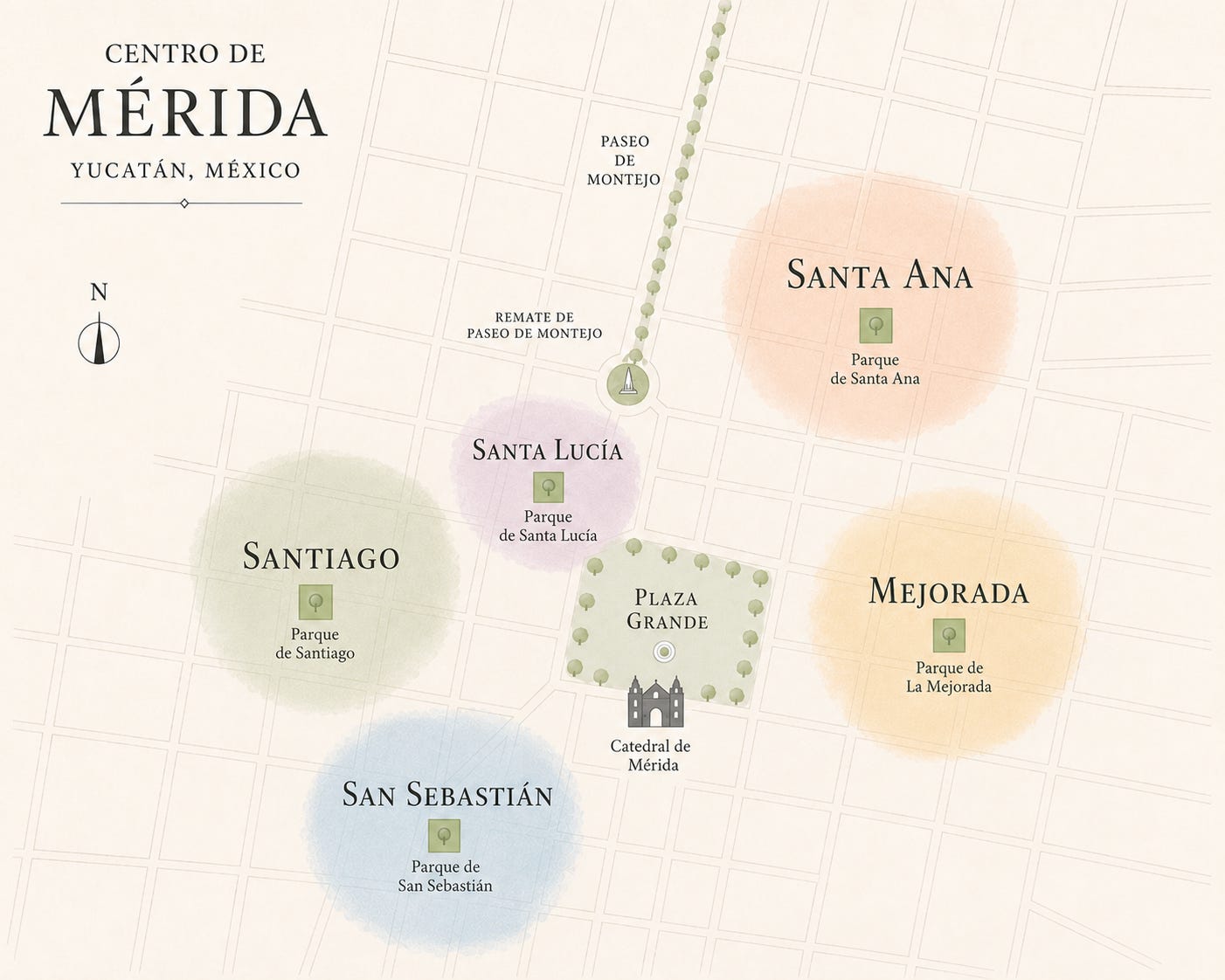
Centro is the historical and colonial heart of the city, where you will find much of the beautiful architecture Mérida is known for. The most popular barrios in Centro include:
Santiago
Santa Ana
Santa Lucía
Mejorada
San Sebastián
Many expats have settled in this part of the city and have been partly responsible for a major real estate boom in recent years. Derelict homes have been bought up, renovated, and sold for top dollar to successive waves of expats arriving in Mérida. By Mexican real estate standards, I would now consider Centro expensive.
CENTRO LISTING: Renovated Colonial home in Santa Ana

A good example is Casa Colibrí in Santa Ana, a fully renovated colonial home currently listed for US$499,000. The three-bedroom property has 327 square metres of living space and retains many of the features buyers look for in Centro, including high ceilings, pasta-tile floors, mampostería walls, and traditional arches. It also includes a swimming pool, landscaped courtyard, roof terrace, solar panels, and air conditioning. The house is located just a few blocks from Santa Ana Park, Paseo de Montejo, and Santa Lucía.
This is the kind of property that now attracts foreign buyers to Centro: the colonial character is still there, but the difficult renovation work has already been done. The asking price also shows just how far the market has moved. At half a million US dollars, this is no longer inexpensive Mexican real estate.
Centro appeals to people who value colonial homes, walkability, culture, and restaurants. You will also find an established foreign community here, along with English-language events and even the Mérida English Library. While that may sound impressive, I should caution you that unless you count yourself among the woke Left, you may find little worth reading there.
That’s right, Mérida has its fair share of progressive expats, and many of them seem to concentrate in Centro. But do not let that put you off the city. There are also plenty of like-minded foreigners here, including many who arrived during the Covid years.
One thing to note about Centro is that the heat feels more intrusive here. Most local homes and buildings are constructed from cement, concrete, and cinderblock, all of which absorb the beating sun throughout the day and then radiate that heat back during the supposedly cooler evenings. Traffic can also be intense, so it is often better to use ride-shares such as Uber or DiDi, or simply walk during the cooler hours, rather than wrestle with downtown traffic and parking.
Paseo de Montejo also runs through the Centro area and is one of Mérida’s most famous streets. Many of the grand mansions built during the henequen era still stand along the avenue, with some now serving as museums, banks, offices, or event spaces. The street is also lined with restaurants and cafés and is a favourite place for an evening stroll. Many of the city’s major parades and public celebrations, including the Día de Muertos procession, also take place here.
García Ginerés and Itzimná
To the northwest and northeast of Centro lie the colonias of García Ginerés and Itzimná. These neighbourhoods offer an older, more established middle ground between the historic centre and Mérida’s modern north.
Here you will find mature trees, larger traditional homes, quieter residential streets, and quick access to Centro. The atmosphere is also more local and generally less intense than living directly downtown.

At the time of writing, one García Ginerés property was listed for MXN 9.85 million. The single-storey home sits on 690 square metres of land and includes three bedrooms, a large garden, a covered terrace, and a swimming pool.
What makes this property a useful example is that it shows the kind of middle ground García Ginerés can offer. You get considerably more space and greenery than you would normally find in Centro, while still remaining only a short distance from the historic core. The house also comes fully furnished and includes practical upgrades such as solar panels, updated plumbing and electrical systems, and air conditioning throughout.
It is still expensive by ordinary Mérida standards, but it offers a very different type of value from a renovated colonial home in Santa Ana. In Centro, much of the price is tied to architectural character and location. In García Ginerés, you are more likely to be paying for land, privacy, mature gardens, and a quieter residential setting.
If neither a colonial home in Centro nor a modern privada (gated community) appeals to you, but you still want to stay within the city, these are good places to begin looking for a house.
Alemán and Colonia México
Other similar neighbourhoods close to Centro include Alemán and Colonia México. They share many of the same qualities as García Ginerés and Itzimná, so I will not repeat everything here. I mainly wanted to include them so that you recognize the names when you begin looking for a place to live.
Both are established, largely residential areas with a more local atmosphere than Centro or the modern north. They also offer convenient access to shops, services, and the rest of the city without placing you directly in the middle of downtown.
Montebello, San Ramón Norte, and Altabrisa
These three colonias belong together because they represent the lifestyle many North American newcomers imagine when they first begin looking at Mérida. Here you will find modern homes and apartments, privadas, private hospitals, restaurants, and most of the services needed for everyday life.
Montebello is located centrally within the modern north. It is established, attractive, and convenient. San Ramón Norte has a quieter residential feel, with wider streets and generally more upscale housing. Altabrisa is probably the least expensive of the three in terms of real estate and is especially practical for its proximity to healthcare and shopping.
Cholul, Conkal and Las Américas
If you are anything like me, the chaos of city life will grow old rather quickly and you will begin yearning for greener pastures. In that case, you may want to venture beyond the Periférico.
In Cholul and Conkal, you will find newer detached homes, more space, swimming pools, gardens, and quieter surroundings. While prices in these areas have also increased considerably, you can still find better value than in some of the more prestigious northern colonias.
The trade-off is that you will become far more dependent on your car, and some of the surrounding infrastructure may still be under development. Depending on the privada, you may also have to contend with ongoing construction as the area continues to expand.

At the time of writing, this newly built home in a privada in Conkal was listed for MXN 5.3 million. It sits on a 412-square-metre lot and offers 247 square metres of construction, with three bedrooms, three full bathrooms, a guest bathroom, and parking for two vehicles.
The house has the kind of layout many North American newcomers will find familiar. The ground floor includes an open kitchen, a large living and dining area, and a garden with a swimming pool. Upstairs, each bedroom has its own bathroom, while two include walk-in closets. The front bedroom also has a roof garden, and the principal bedroom opens onto a private terrace.
This listing gives you a good idea of what moving beyond the Periférico can buy. For considerably less than many renovated homes in Centro, you get a new detached house, a larger lot, a swimming pool, and the security and amenities of a privada. The trade-off, of course, is that you will be farther from the centre of Mérida and much more dependent on your car.
Las Américas is somewhat different from Cholul and Conkal. It is more densely populated and offers a much greater choice of restaurants, shops, and everyday services. Real estate there is often more affordable than in the more exclusive northern colonias, although prices still vary according to the age, size, and condition of the house.
One important concern in Las Américas is flooding. Parts of the development have experienced serious flooding during periods of heavy rain, including extensive inundation after tropical storms. Before renting or buying there, make sure to look into this and perhaps query some of the neighbours before committing to this area.
La Ceiba and the Country Club corridor
La Ceiba is worth mentioning because it is a long-established, upscale private golf community north of the city. It offers larger homes and lots, plenty of green space, controlled access, golf and club-style living, easier access toward Progreso and the coast, and a quieter, more secluded lifestyle.
The drawbacks are price and car dependence. Homes here generally cost considerably more, and you will need a vehicle for almost everything. La Ceiba sits roughly 10 kilometres beyond the Periférico and forms part of Mérida’s northern country-club corridor.
Although I have included a few real estate listings in this article, I highly recommend renting first when you arrive so you can get a proper feel for the area. As I have mentioned in other articles, renting is a lot like dating: you court the place and learn whether you can live together before making a long-term commitment.
I would have liked to include a fuller discussion of renting here, but that would make this article unbearably long, so it will have to become a separate post. Suffice it to say that renting does not work the same way it does in Canada, and it behooves you to understand the local rental culture before signing anything.
Community and Integration
Many expats here tend to congregate together and form close friendships. There are quite a few English-language events organized throughout the city, many of which you can find through the local expat Facebook groups.
One recommendation I would make is to also make an effort to connect with the locals. This will broaden your horizons, gently force you to learn more about the local culture, and help you pick up some basic Spanish. If you are planning to settle here, then it only makes sense to become comfortable in the community around you.
For example, my wife and I join a group of expats every Christmas season to host a Christmas evening at a local government-run children’s home. The children speak no English, but many are in real need of human company. We divide into small groups of three or four and visit different rooms of children ranging in age from toddlers to teenagers. We decorate a Christmas tree, hand out presents, share a few activities, and enjoy some snacks together. It is a meaningful way to meet other expats while also testing whatever basic Spanish you have managed to pick up.
There are also a few public places where you can easily make English-speaking connections, such as Hennessy’s, the Irish pub on Paseo de Montejo. It frequently hosts live music on the patio, the atmosphere is excellent, and it is easy to run into other English-speaking expats there.
Getting around
How easy it is to live without a car will depend greatly on where you settle. In Centro, you can walk to restaurants, markets, and many everyday services. In the modern north, you have shops and hospitals nearby, but they are often spread across busy roads and commercial developments. Once you move beyond the Periférico to Conkal, Cholul, or La Ceiba, a car becomes much closer to a necessity.
Mérida’s public bus system is known as Va y Ven and covers a large network of routes throughout the city and surrounding areas. It is considerably more modern than the old buses many longtime residents remember, although whether it works for you will depend heavily on your route, schedule, and tolerance for waiting in the heat. The official Va y Ven app also provides route, stop, and schedule information.
Mérida has also expanded its network of bicycle lanes, but I would hesitate to rely on a bicycle as my main form of transportation. The heat alone makes that difficult for much of the year, and the quality and continuity of the routes can vary depending on where you live.
Driving here takes some adjustment. Traffic can be aggressive, motorcycles appear from every direction, street numbering can be confusing at first, and potholes or flooded roads can complicate matters during the rainy season. Now combine everything I just mentioned, and just imagine the chaos you could find yourself in!
Driver training also does not appear to be taken as seriously here as it is in Canada. Many local expats reported that the practical portion of the driver’s examination was essentially a parallel-parking exercise rather than the full road test Canadians would expect.
A few years ago, my wife enrolled in driver training while I was away on a trip. When I returned, I was curious to know how it had gone, so I asked her about it. Everything seemed copacetic until we went for a drive and I noticed that she was not doing shoulder checks.
I asked whether the instructor had mentioned them. My wife told me that she had asked about shoulder checks and was told that “you only do a shoulder check when you have a gut feeling that you should.” That pretty much sums up what you can expect here in terms of driving experience.
While it is possible to get around by bus or ride-share, I think it probably makes the most sense to have a car in Mérida. You might feel differently, but I like to be able to go where I want, when I want. I also like travelling in comfort, and having the AC cranked to the max is the way I like it. If you don’t have a car, Uber or DiDi are quite inexpensive.
As an example, right now it’s nearly 9pm on a Monday night as I write this, and an Uber from Conkal to Centro would cost me just over $17 CAD. DiDi is quoting just over $14 CAD for the same trip. Traffic can still be heavy this time of night, so you are looking at a drive of about 40 minutes, give or take.
If you fancy a walk through Centro, you can certainly do that, as the area is quite walkable. But here we have to bring up the weather again. Walking in the middle of the day will have you ducking from café to café in search of air conditioning. You are getting heat from three directions: the sun above you, the pavement beneath your feet, and the cement buildings radiating it back from the sides. Yeah, it’s really that bad.
Early morning or evening is really the best time for a stroll. Mérida also has several parks where you can escape the radiating concrete and soak up some greenery instead. Gran Parque La Plancha is one of the largest. It has a food court, several children’s play areas, a skate park, a dog park, a large pond, a musical fountain, and plenty of open space for walking or simply getting outside.
Ultimately, whether you need a car will depend on the neighbourhood and lifestyle you choose. Centro is reasonably walkable, and buses or ride-shares may be enough for someone who does not travel often. But once you move into the newer northern developments or beyond the Periférico, owning a vehicle makes life considerably easier. For me, the freedom and the air conditioning make the decision an easy one.
Daily-life Realities
This is where we get into the nitty-gritty of living in Mérida and, by extension, Mexico. I am not going to hold back on some of the more irritating aspects of life here. Doing so would be a disservice to you, and I am not trying to sell you the perfect place.
Get ready for the good, the bad, and the ugly.
Shopping and Groceries
One of the benefits of living in Mexico rather than many other Latin American countries is the availability of familiar North American retailers. In Mérida, we have Costco, two Sam’s Club locations, numerous Walmart stores, two Home Depot locations, several Office Depot stores, Petco, and many other familiar chains.
Mérida has no shortage of supermarkets, and where you choose to shop will have a noticeable effect on your grocery bill. You can shop very cheaply if you buy local products and use the more affordable chains, or spend considerably more if you prefer imported goods and premium stores.
Bodega Aurrera
Bodega Aurrera is generally the most budget-oriented option on this list. It is owned by Walmart and focuses heavily on low prices, basic groceries, household goods, and everyday essentials. The stores are usually more functional than polished, but they are useful if you are trying to keep your grocery bill under control.
Súper Akí
Súper Akí is a regional chain founded in Mérida and is especially common throughout the Yucatán Peninsula. It sits somewhere between a neighbourhood supermarket and a larger discount store, depending on the location. Prices are generally reasonable, and it is particularly useful for local products and ordinary household shopping. The chain operates numerous branches across Mérida, including in Centro, Alemán, Altabrisa, Las Américas, and other parts of the city.
Soriana
Soriana is one of Mexico’s major national supermarket chains. It is a broad middle-of-the-road option, with groceries, household goods, clothing, electronics, and seasonal items depending on the store format. Prices can be competitive, especially when promotions are running, although the shopping experience and selection vary considerably from one branch to another.
Chedraui
Chedraui is another major Mexican supermarket chain and is widely used throughout Mérida. Standard Chedraui stores are generally affordable and practical, while the Selecto format is more upscale and carries a wider range of premium and imported products. Chedraui Selecto is where you are more likely to find speciality foods, better wine selections, imported goods, and products aimed at wealthier Mexican and foreign shoppers.
Fresko
Fresko sits toward the more upscale end of the market. It is part of the La Comer group and generally offers a cleaner, more polished shopping experience, with strong produce, bakery, prepared foods, meats, and imported products. It is convenient and attractive, but you should expect to pay more than you would at Bodega Aurrera, Súper Akí, or many standard Chedraui and Soriana locations.
Mercados
Local mercados are a different experience entirely. They are often the best places to buy fresh fruit, vegetables, meat, and regional products. Prices can be lower, especially if you shop regularly and become familiar with the vendors, although quality and cleanliness vary from stall to stall.
The major markets in Centro, such as Lucas de Gálvez and San Benito, can feel overwhelming at first, but they offer a much more local shopping experience than the supermarket chains. Smaller neighbourhood markets are often easier to navigate and may become part of your normal routine once you settle into an area.
In practice, most foreigners end up shopping at more than one place. You might buy bulk items at Costco, ordinary groceries at Chedraui or Soriana, speciality products at Fresko, and fresh produce from a local market. The more willing you are to buy Mexican brands and shop locally, the easier it is to keep your grocery bill under control.
OXXO
I probably should have included OXXO in the previous section, but it is such a distinctly Mexican institution that it deserves a category of its own.
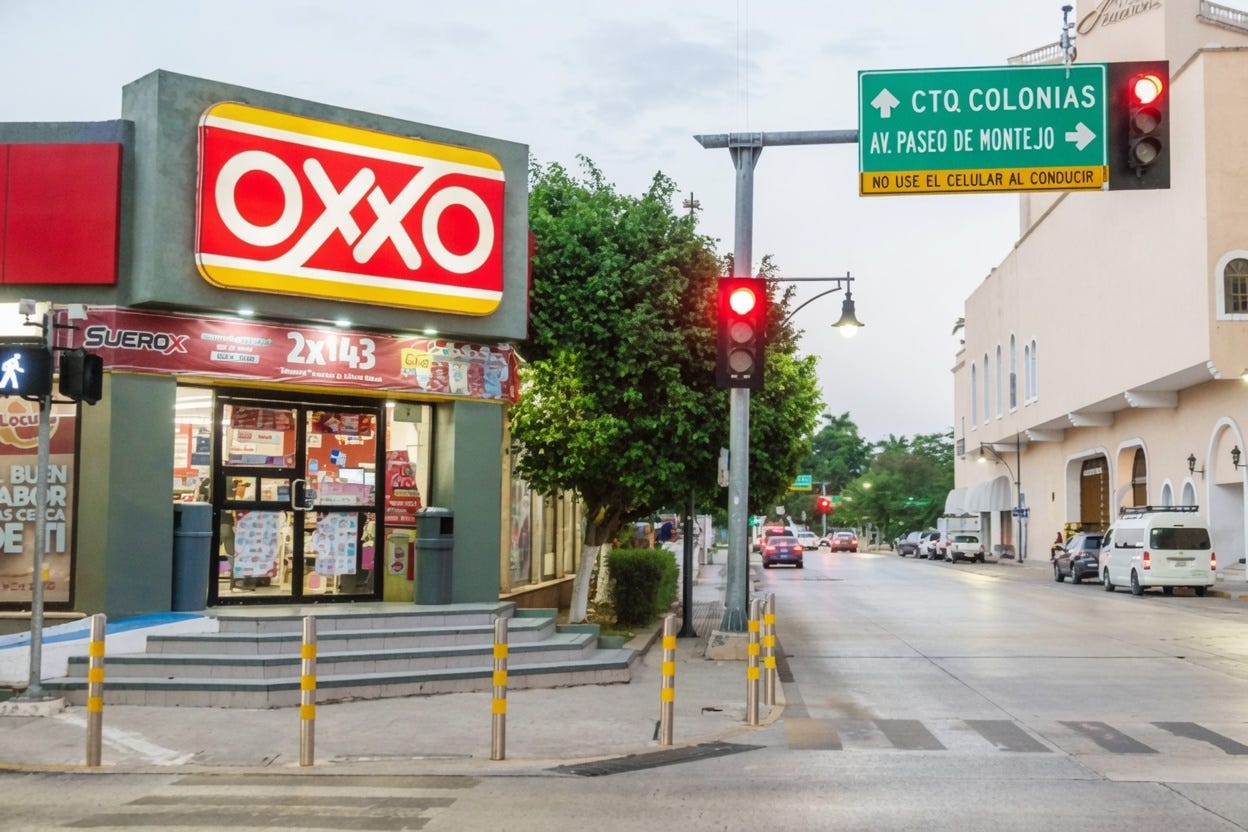
OXXO is essentially Mexico’s answer to 7-Eleven, although it has become far more deeply embedded in everyday life and culture than that comparison might suggest. You will find one on seemingly every second corner, and sometimes two within sight of each other.
The stores carry basic groceries such as bread, milk, and eggs, along with snacks, coffee, soft drinks, and a wide selection of local and imported beer. You can also add credit to a pay-as-you-go mobile phone, pay certain bills, make small financial transactions, and take care of various everyday errands at the counter. Many locals also use OXXO to buy or exchange the large 20-litre garrafones of drinking water found in almost every Mexican home.
OXXO is rarely the cheapest place to shop, but that is not really its purpose. You pay for convenience, and in Mexico, few things are more convenient than knowing there is almost always an OXXO nearby.
Noise
This will be one of the biggest adjustments for many Canadians moving to Latin America.
As a Canadian who lived in a town of 11,000 people, I value peace and serenity. That can be hard to find here, especially if you live in a more traditional colonia such as Francisco de Montejo, or even Centro. Get ready for constant noise and chaos.
Your neighbours will have dogs. Lots of them. And they do not pamper them the way we do in Canada. Dogs often stay outside all the time, and they bark at every living thing that passes by. They bark at all hours of the night and, sometimes, for no apparent reason. It is simply part of life.
Mexicans love to party, and they party often. They also seem either addicted to noise or completely immune to it. They love those big portable speakers, and you will see them everywhere, sometimes even on bicycles. I have joked many times that those speakers only come with one volume setting, because they always seem to be turned up to the maximum.
Another difference is that, in Canada, we tend to have a built-in habit of trying to get along in public spaces. We usually keep our phones on silent, or lower the volume if we are watching a reel or playing a game. Not so here. Phones are also often on maximum volume, and you get to listen to whatever soccer match someone is watching or game they are playing.
There is definitely some culture shock involved, and these things can become irritating very quickly. However, it is important to understand that this is part of the culture, and it is up to us to adapt.
Mexico will not adapt to you.
Garbage
Within the city limits, and in most surrounding communities, garbage pickup is scheduled two or three times per week. However, there are still some less affluent areas of the city where people elect to burn their garbage instead.
In my area, garbage collection costs somewhere in the neighbourhood of 30 pesos per month. For some of Mérida’s less fortunate residents, even that small charge may compete with food and other necessities. They burn their garbage instead, plastic and all.
Depending on where you live in the city, you may frequently notice the smell of burning plastic wafting through your neighbourhood, and it can be a real turn-off. For me personally, this has been one of the top three things I dislike most about living here.
It is also another reason to rent before you buy. You do not want to commit to an area only to discover that garbage burning is a regular occurrence nearby.
Traffic
I have already briefly touched on traffic in an earlier section, but I want to mention again that it can get pretty brutal in the city. Mérida’s population has now expanded to more than one million people, so rush hour can be a real adventure. If you do not have to drive during those periods, try to get your business done between the morning and evening rushes to avoid the Mad Max experience.
Traffic also relates to foot traffic and how common it is to wait in line for services. Waiting is the Mexican way, and that is another adjustment that many of us from Canada may not be as used to.
Water Quality
You may have already heard that you cannot drink the water from the tap in Mexico. Well, the rumour is confirmed. Most Mexican families buy their drinking water in 20-litre garrafones from places such as OXXO, or have them delivered to their homes. Some more fortunate residents install filtration systems that allow them to drink the water from the tap.
If you are new to Mexico, let this be your warning: DO NOT DRINK THE TAP WATER!
In Mérida, the water also contains a lot of minerals. The Yucatán Peninsula sits on a vast layer of limestone and dolomite, and the groundwater passes through this porous rock before reaching your home. The result is very hard water that leaves mineral deposits behind and can quickly cause scale to build up in showers, taps, kettles, water heaters, and other appliances.
Residential water systems also operate differently. In a typical house, water from the municipal supply or a well is stored in a cisterna and pumped up to a tinaco, which is the large holding tank you will often see on the roof. From there, gravity feeds the water into the house. Not every property uses exactly the same arrangement, but this is common in standard Mexican homes.

The resulting water pressure is abysmal and you have to basically jump around in the shower just to get wet. If you buy your own home, you will want to install a pressure pump, a water softener, and a filtration system if you want to live like you’re used to up in Canada.
Customer Service and the Pace of Life
Oh boy, this is an interesting one. As Canadians and Americans, we are so used to an efficient lifestyle where things happen on time and with the expectation that the customer is always right. Not so in Mexico.
First, it is important to understand that things happen when they happen here. You may have an appointment with the plumber tomorrow at 2 p.m., but that does not necessarily mean the plumber will show up at 2, or even tomorrow, for that matter. You will slowly get used to the fact that following up with service personnel is simply part of life. Frequently, they’ll tell you mañana. But mañana often means “not now”, rather than “tomorrow”.
Second, the customer is not always right. In fact, it doesn’t matter if the customer is right. The reality is that the level of service you experience often depends on how you treat the staff. If you insist on having a certain level of service, or you demand that your expectations are met, you’re very likely going to go home empty-handed and frustrated.
Third, staff will sometimes tell you that something “is not possible” simply because they do not know how to do it. They don’t want to appear that they don’t know, and they don’t want to bother someone else by asking, so the easiest answer is simply to tell you that it cannot be done.
The onus is then on you to persist, find someone more knowledgeable, or return another day and try again. It can be frustrating, but over time you learn that patience, politeness, and persistence will usually get you much further than confrontation.
Deliveries
Deliveries are a huge part of life in Mexico. You can have almost anything delivered to your home, including medication and liquor.
You will already be familiar with Amazon and Uber Eats, but in Mexico we also have Rappi. The service delivers nearly anything to your home by motorcycle, and it is generally quite affordable.
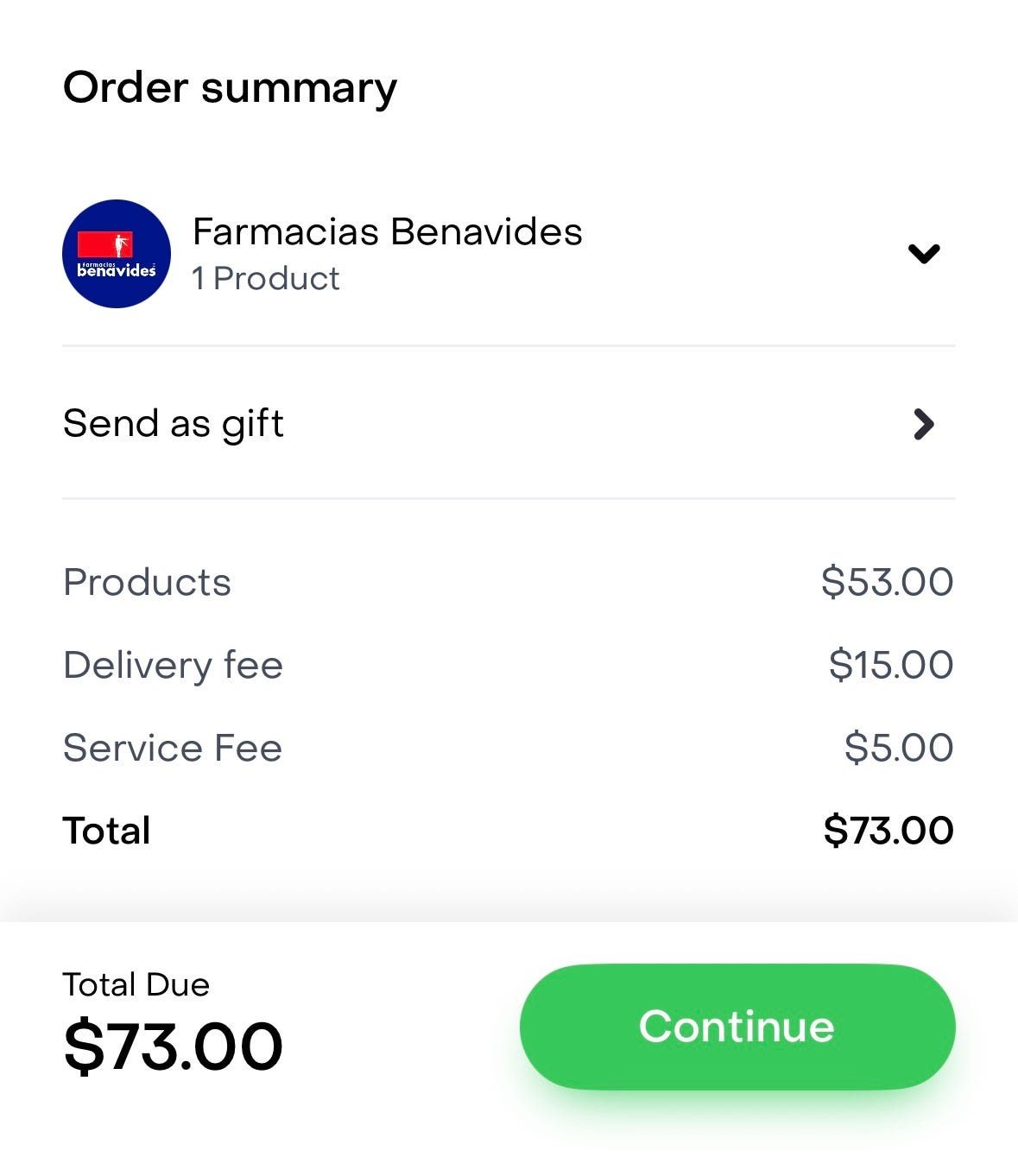
As an example, it would cost me 73 pesos (approximately $5.91 CAD) to have some aspirin delivered within the next hour. I live outside the city, but if you live in town, you could probably have it delivered within 20 minutes.
The Verdict
So, could you build a life in Mérida?
For the right person, absolutely. Mérida is safe, culturally rich, well connected, and large enough to provide nearly everything you need for everyday life. You can find modern healthcare, familiar shopping, good restaurants, an international airport, and a wide variety of neighbourhoods and housing options. The coast is nearby, the cost of living is still favourable compared with Canada, and there is an established expat community for those who want one.
But Mérida is not paradise, and it will not suit everyone. The heat can be oppressive, the traffic and noise can wear you down, and many aspects of daily life will not operate according to the expectations you brought with you from Canada. You will have to adjust—not only to a different climate, but to an entirely different rhythm of life.
For me, despite the things that drive me crazy, Mérida has provided a very good life. It has become my home, and I believe it remains one of the better places in Mexico for someone looking to establish a long-term base. But your answer will depend on what you value, what you are willing to tolerate, and how prepared you are to adapt.
Continue the Journey
This article only scratches the surface of what it is really like to build a life in Mérida. There is much more I could add, but in the interest of keeping this article manageable, I will stop here and return to many of these subjects in future instalments.
Some of the topics you can expect include:
More daily-life realities
Power outages
Banking
Healthcare
A detailed cost-of-living analysis
Residency requirements
Renting and buying property
Buying a car in Mexico
There is still a great deal to cover, and that is why we will continue exploring life in Mérida, and Mexico more broadly, across a wider series of articles.
NEXT: Can You Trust the Healthcare in Mérida?
Stay free,
Exiled Mountie
I know I couldn't handle the heat and humidity in Merida. We chose San Miguel de Allende -- for winters at the present time -- because of the high-altitude desert climate. My skin prefers some humidity but the rest of me loves the intense sun and dryness. I can relate to the barking dogs and parties, though since we moved to a different part of Centro in a small condominium complex we don't hear either. It never bothered us much as our attitude has always been that we have to adapt to Mexico and not the other way around.
I can also relate to the woke progressive expats! Life would be nearly perfect if we could find a few like-minded people in San Miguel. I try to remember that we're all there to escape something.
You've been very honest in your assessment of life in Mexico. For us, the pros definitely outweigh the cons.