

Could you actually leave Canada tomorrow if you needed to?
Many Canadians have been painfully aware of the slow but agonizing decline of our once-great country.
Ever since Trudeau junior took office in 2015, we have watched our standard of living fall, our culture eroded by unchecked and wanton mass immigration, our nation divided along ethnic, religious and even gender lines, and individual rights such as our freedom to speak our minds or simply travel severely restricted.
Our social welfare system is straining under the weight of a large elderly population, and there is real concern that the Canadian dream of retiring one day with a pension may simply not be possible for the people funding it today.
The end result, after years of elitist top-down governance, is a seemingly unfixable mess on a scale we have never seen before in our country’s history.
In fact, the decline has become so obvious that there really is only one conclusion left: it is being directed to decline.
Despite the media’s and governments’ best efforts to divert your eyes from the flaming dumpster fire, you have probably been staring at it for a while.
You know that the old way of living is gone for good and that we are currently in a transition phase toward something else entirely. What that will eventually look like is anyone’s guess. But if we have to base our guess on the signs and symptoms we see today, it is not looking good.
Perhaps you find yourself in a transition period of your own. You still earn a good income in Canada. Maybe you own assets that are still appreciating. Cutting and running tomorrow might not make much sense yet. But you can feel that the time is drawing near, and you do not want to be caught with your pants down when the time comes.
That small, gnawing voice at the back of your mind is starting to scream that it is time to arrange other options or establish a Plan B somewhere beyond our shores. The problem is that setting something like that up can seem overwhelming at first. Where do you go? Where do you even start?
The good news is that you probably still have time. Canada will not be over tomorrow. But if you start creating options now, you will be in a much better position to leave when the time is right and arrive somewhere with the beginnings of a second life already established.
That is the whole point of planting flags.
And having a Plan B somewhere else should give you some peace of mind. At least you will know that you have another option and will not be sitting around waiting to boil to death with all the other frogs in the pot.
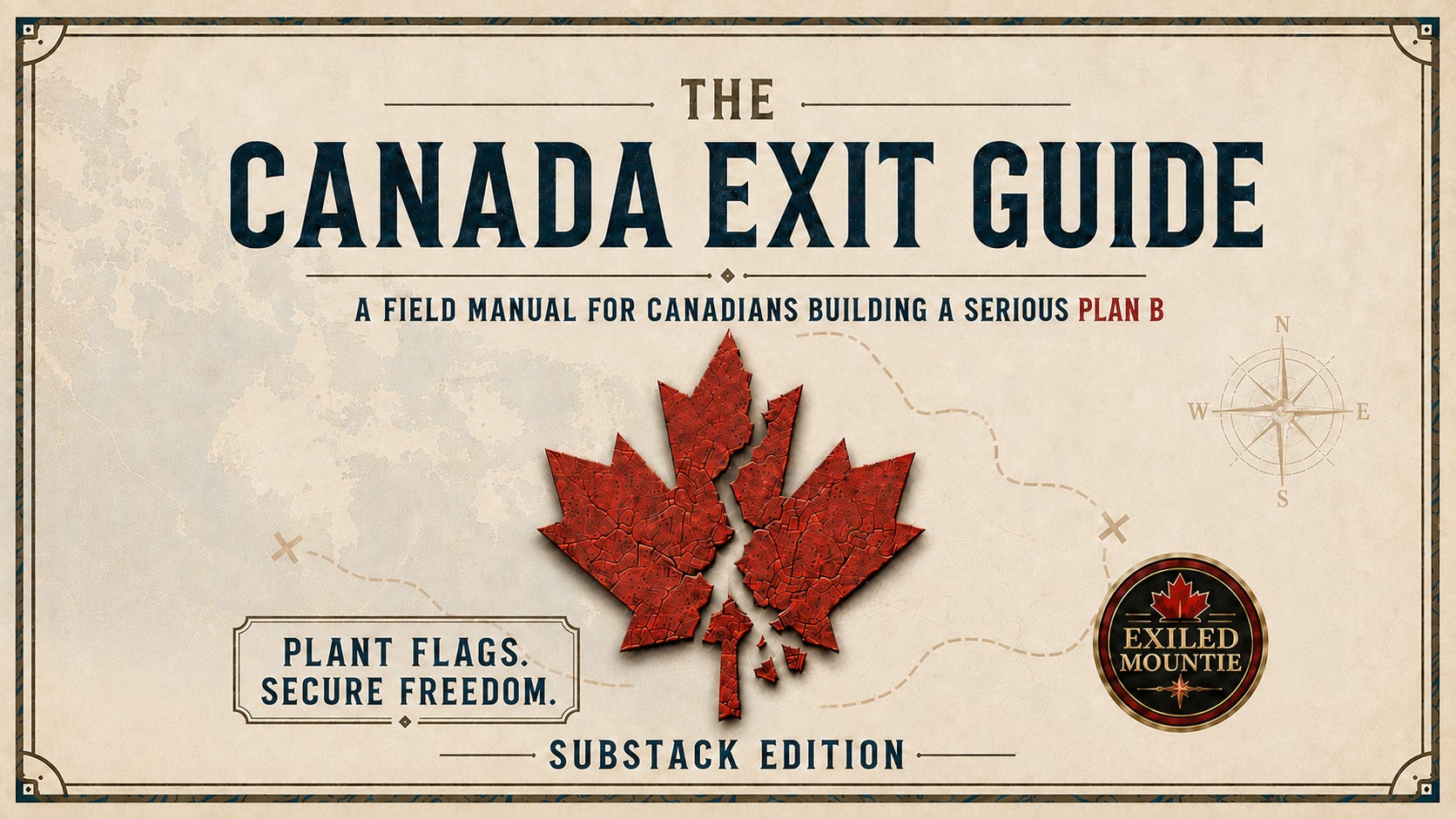
The Canada Exit Guide is designed to help you begin that process by getting the Canadian side of your Plan B organized.
Some of the topics covered in the guide include:
Gathering the documents you are likely to need
Making sure passports and time-sensitive documents are current
Understanding apostilles and document authentication
Managing banking, phones, 2FA and mail from abroad
Understanding Canadian tax residency and the deemed-disposition rules
Reviewing provincial healthcare coverage and absence rules
Figuring out whether your target country works in real life, not just on paper
Planning and carrying out a trial run
Thinking through children, schools and pets
Comparing potential destination countries
Approaching foreign property carefully
Preparing for the final 90 days before departure
The guide also contains a number of worksheets, trackers and practical tools, including a Canadian departure profile, document tracker, tax-residency worksheet, trial-run scorecard, 90-day field plan and pre-departure checklist.
This is not meant to be an exhaustive, step-by-step instruction manual that tells every Canadian exactly where to go and what to do.
Everyone’s situation is different.
Instead, it is meant to help you get organized, identify the weak points in your plan, understand the major issues you need to think about, and start building an exit option while you still have time to do it properly.
I will also update the guide from time to time as new and relevant information comes to light. When that happens, I will update the PDF on this page and add a note explaining what has changed so the guide stays current.
If there is something you think should be included that is currently missing, let me know in the comments. I will consider it for a future update.
Conclusion
Leaving Canada today may not be an option for you.
Perhaps you do not even want to leave yet. But having an option in another country is worth the trouble. You may never need it. But if the day comes when you do, you will be glad you did the work while you still had time.
Remember: it is better to have options than regrets.
Paid subscribers can download the full Canada Exit Guide below. If you’re not a paid subscriber, you can still purchase the guide separately on the website for $19 CAD.
A couple of things to consider if you are not quite serious...
Home Equity Tax Man’s Back : An executive who questioned why Canadians “glorified this idea of homeownership” yesterday was named chair of cabinet’s latest housing agency, Build Canada Homes. Evan Siddall as $459,000-a year CEO of CMHC also financed research into a home equity tax but dropped the scheme when Blacklock’s made it public.
and...
A new Fraser Institute study reveals that the average Canadian family spent 42% of its income on taxes in 2025 - which is more than they spent on housing, food, and clothing combined.
Check your birth certificates as well - you will be told that ...
An original Alberta birth certificate from 1950 does not technically expire, but it can be deemed invalid or rejected by modern agencies (such as Passport Canada or registry agents).
This is Alberta, but other provinces might have the same issues.
I would love to help you out and take a membership., but I can't. At this stage, it's hard to keep on top of things here. Have you heard about all the fires? We have two data centres where I live. One has been there a while and the other is just being built so we have been given water restrictions now. I am friends with a newly retired water maintenance manger for the city I live in and he told me there was more than enough water and they dump tons of it because water cannot sit still for months on end - or something along those lines. Nevertheless, everyone's yards are going brown...perfect for fires, right?