In the first lesson, we talked about the easy first flag.
For a Canadian, that usually means Mexico: close, warm, familiar enough, with cheap dentists, beautiful beaches, and just enough comfort that you can pretend you are being bold while still keeping one hand on the pool ladder. There is nothing wrong with that.
It is where many Canadians go to test the water. You dip in a toe, spend a few months outside the Canadian machine, and discover what happens to your nervous system when nobody around you is talking about doctor shortages, climate panic, or the latest moral lecture from someone who thinks compliance is a personality.
Paraguay is different.
It is not the country you pick because you want a winter rental and better guacamole. Paraguay enters the conversation when the question changes from “Where can I spend a few months?” to “Where could I actually build a fallback position if Canada keeps losing its mind?”
That question makes Paraguay harder to dismiss, even though on the surface it does not look like an obvious Canadian escape hatch. It is landlocked, hot, humid, and not polished for North American comfort. It does not have Mexico’s beach-town infrastructure, Panama’s banking reputation, or Costa Rica’s retirement-brochure glow.
The bureaucracy can feel like the final boss in a game you did not know you were playing. Things move slowly. Paperwork still has an old-world feel. Corruption is part of the operating environment. English will not carry you far, and outside the expat bubble you may discover that your Grade 9 Spanish has aged about as well as the Canadian housing market.
Anyone who needs life served up bilingual, air-conditioned, and delivered with a customer-is-always-right smile may not last long here.
Paraguay is also unlikely to attract the same abundance of soft liberal lifestyle refugees that beach towns do. It is not very glamorous, not cute in the usual expat-marketing way, and not especially interested in becoming the next polished escape product. But that is also its advantage.
Easy countries get discovered. Pretty countries get packaged. And once a place becomes fashionable, it usually gets expensive, regulated, and slowly Californicated by people fleeing the place they keep trying to recreate.
Call Paraguay a diamond in the rough if you want, but do not skip over the rough part.
For the right individual, what remains is valuable: land, water, food production, hydroelectric power, and low-tax logic. Paraguay also has something harder to price: a lower profile and enough distance from the North American machine to make a man sit up a little straighter.
The Hard-Asset Country
Paraguay starts to make sense when you stop looking at it like a tourist and start looking at it like someone trying to create options.
Modern people have been trained to think wealth is digital: a house price, a pension statement, a credit score, or some government portal with a password reset that fails at the worst possible time.
Those things have their place, but they are not the same as access to the physical resources that keep a society functioning.
Land. Water. Food. Power. Distance.
Those are the five essential pieces of survival in a world that keeps getting more expensive, more fragile, and less predictable.
You could object here and say Canada has those things too.
Fair enough.
Canada has land, water, food production, electricity, and more geographic distance than most countries know what to do with. The problem is not that Canada lacks resources. The problem is that ordinary Canadians are increasingly separated from those resources by land prices, winter, zoning, permits, inspections, bylaws, energy costs, and a political class that seems to treat self-reliance as something suspicious until properly licensed.
Power is the easiest example. Canada has electricity, but in much of the country it is expensive, and in February it is not optional. A winter power outage is not a lifestyle inconvenience. It can become a survival problem fast, especially for older people, rural households, and anyone depending on electric heat, pumps, medical equipment, or backup systems they were never taught to maintain.
Food follows the same pattern.
Canada can grow an abundance of food. The question is whether the average Canadian is allowed, equipped, or economically positioned to produce much of it himself without running into the local permission machine, especially when winter already takes half the year off the table.
This is not imaginary. Global News reported years ago on the Drummondville, Quebec couple who faced daily fines after turning their front lawn into a vegetable garden because the municipality required part of the yard to remain grass.
Toronto’s backyard hen program was not treated as some normal household choice either. It became a pilot program, then a paused program, then a file that only existing registered households could continue under specific conditions. And on Vancouver Island, the Cowichan Valley zoning fight showed how quickly rural land use, farm retail, agritourism, and small agricultural businesses can become trapped inside planning language most normal people would need a lawyer and a strong coffee to understand.
That is the point.
A country can grow food and still make ordinary people dependent when self-reliance stops being a household skill and becomes a municipal privilege. That is how you end up with land on paper, while practical self-reliance becomes expensive, conditional, and bureaucratic in real life. Before long, the garden, the hens, the shed, and the farm stand are not signs of resilience. They are files on someone’s desk.
That is not resilience, but supervised ownership.
In Paraguay, the relationship between land, water, food, power, and daily life is different.
The country sits over part of the Guarani Aquifer, and its river systems shape agriculture, transport, and power production. Hydroelectricity gives a small-population country a serious energy position, while its agricultural base punches well above its population size. Paraguay grows, raises, moves, and exports things the rest of the world still needs.
This is not a country pretending kale smoothies are infrastructure.
Outside the polished city bubble, land is also more likely to be understood as productive ground than as a decorative asset waiting for a neighbour’s complaint and a bylaw officer with a clipboard.
That does not mean you romanticize cheap acreage on a website. Bad title, poor access, flooding, boundary disputes, bad roads, and smiling sellers with flexible memories are part of the file.
In Canada, land too often comes with the slow discovery that ownership has a committee attached to it. In Paraguay, the question is still more practical: can the land produce something, hold water, support animals, and sit inside a community where farming, family networks, and local relationships still carry real weight?
That is the difference between land as a working asset and land as permission with a view.
Paraguay does not make land simple. It just keeps the conversation closer to reality.
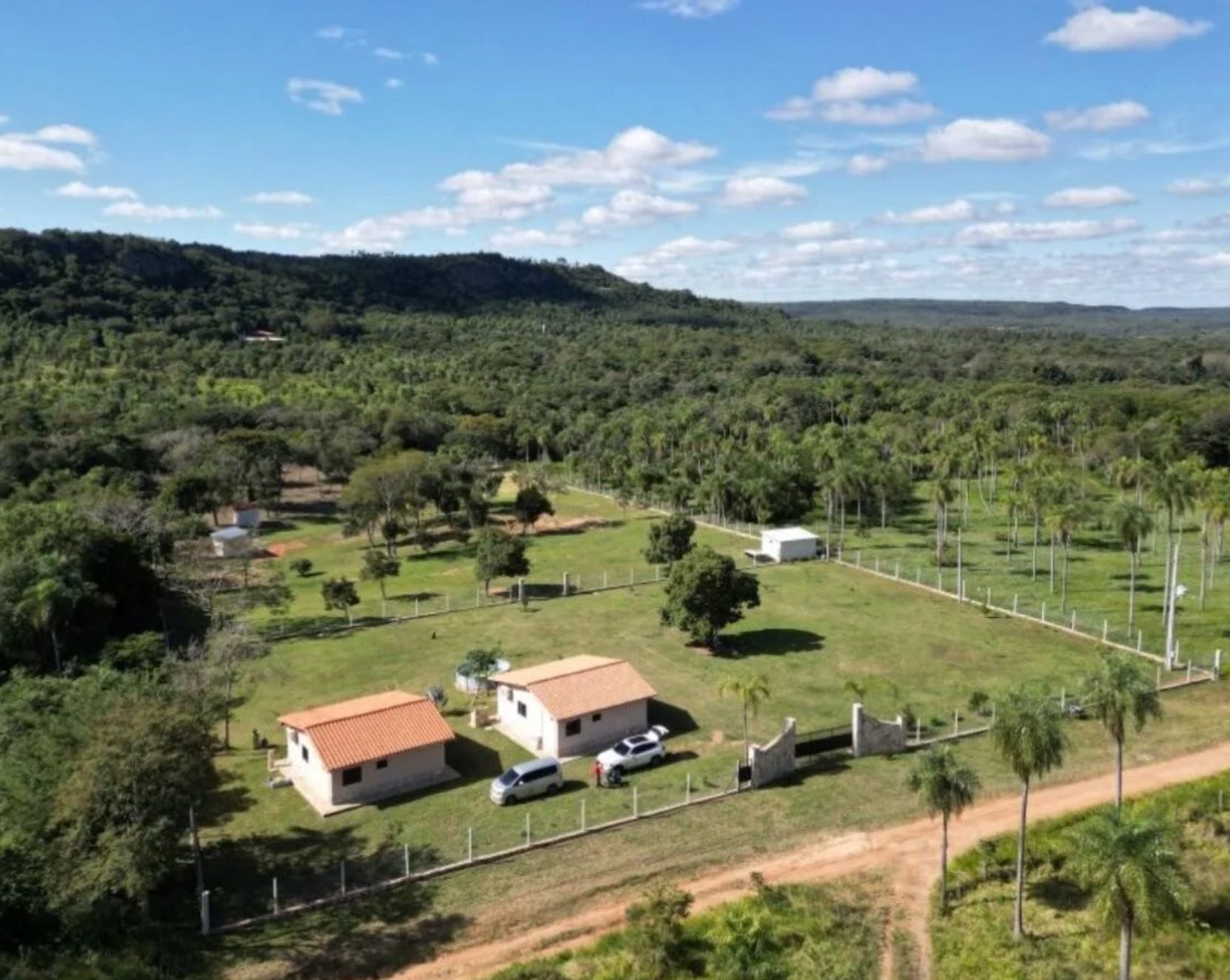
Field Note: A rural acreage listing is not a life plan. But it does show why Paraguay gets attention. Land is still discussed as productive ground, not merely as a luxury backdrop with a planning committee attached.
Source:Isipisi Paraguay Note: The listing is in German, but it is worth running through Google Translate.
The Tax Angle
For a Canadian, Paraguay’s tax setup can sound almost fictional at first.
Paraguay’s personal income tax tops out around 10 percent. Corporate tax sits in that same neighbourhood. For someone used to Canada’s income tax, sales tax, property tax, carbon tax, payroll deductions, fees, reassessments, and the general experience of being gently mugged by every layer of government with a logo, that alone is enough to make a man blink twice.
But the 10 percent number is not even the best part.
Paraguay is commonly discussed as a territorial-tax country. In plain English, Paraguayan-source income is taxed in Paraguay, while much foreign-source income may sit outside the Paraguayan income-tax net, depending on how the income is earned, structured, and sourced.
For the right person, that is the real signal.
A Canadian with online income, foreign clients, foreign business activity, investments, pensions, or other non-Paraguayan income may be looking at a jurisdiction where the local tax claim is not merely lower than Canada’s. It may actually be zero.
Not reduced by a boutique credit. Not softened by some temporary incentive with a sunset clause and a government PDF. Potentially outside the local tax net altogether.
For Canadians, that kind of tax logic can feel almost alien. We are used to a system where the state behaves as if every dollar you earn first passes through Ottawa’s spiritual possession before being reluctantly returned to you in smaller pieces. Paraguay’s tax logic is different enough that it can change the entire Plan B calculation.
But this is where the fine print lives.
Paraguay may be low-tax, but it is not a tax cartoon. The outcome depends on the source of the income, the structure behind it, your residency status, where management and control actually sit, and how Canada views your exit. The headline is attractive, but the details decide whether it works for your file.
And none of this means you can move to Asunción, declare yourself finished with Canada, and magically stop caring about the CRA.
Canada does not release taxpayers with a handshake and a fruit basket. If your goal is a genuinely low-tax or zero-tax setup, you are no longer just talking about optionality. You are talking about becoming a non-resident of Canada for tax purposes, cutting significant residential ties, documenting the exit properly, and getting advice from people who understand cross-border tax planning.
Paraguay may be part of the answer, but it is not a magic spell. The Paraguayan side can look simple on paper, but the Canadian exit is where people usually make expensive mistakes.
There are also a few practical details that make Paraguay more interesting than it first appears.
Residency is one of them. Paraguay is not effortless, but compared with many countries in the region, it remains one of the more accessible places to build legal status if your documents are clean and you are willing to do the paperwork.
Temporary residency under the current migration framework can be valid for up to two years and is generally the normal step before permanent residency. The basic file usually means identity documents, birth certificate, proof of entry, marital-status documents if applicable, police or criminal-record certificates, and proper apostilles or legalization.
In other words, the “deep backup” is not purely theoretical. There are actual doors to walk through.
That is why the Paraguay Residency Guide exists. If Paraguay is moving from “interesting idea” to “serious file,” the residency side needs to be understood early, not after you have already started making emotional plans around cheap land and low taxes.
Cost of living is another part of the picture.
The first stage of landing in Paraguay almost always costs more than people expect. Residency help, housing deposits, transport, banking setup, document fixes, translations, and the first few rounds of foreigner tuition can add up quickly. Low-cost country does not mean no-cost landing.
But once you are past the landing phase, the gap with Canada can become hard to ignore.
Expatistan, which builds its cost-of-living comparisons from user-submitted prices, gives a useful directional anchor. When Asunción is compared with Ottawa, Ottawa comes out dramatically more expensive, especially once rent enters the picture.
Cost-of-living comparisons are only a guide. Your real number depends on how you live, where you settle, what habits you import, and how much convenience you insist on buying. But for a Canadian willing to live modestly in a smaller city or rural area, Paraguay can offer breathing room that is getting harder to find back home.
The same practical mindset applies to banking. Paraguay runs on guaraní day to day, but U.S. dollars are part of the financial reality, especially for savings, larger transactions, business, and property conversations. Residents can access banking, including accounts in guaraní and U.S. dollars, but the setup still requires documentation, patience, and local guidance. This is not a place where you should expect to land, wave a passport, and have a bank reorganize its compliance department around your convenience.
Security also belongs in the file. Paraguay is not a war zone, and many expats live peacefully in small towns, rural areas, and settled communities without drama. But it is still Latin America. Petty crime exists, border areas have their own issues, and rural property needs the usual basics: gates, relationships, visibility, and normal precautions.
Paraguay rewards people who are alert without being hysterical, prepared without being theatrical, and humble enough to learn how the place actually works before declaring they have found the promised land with cheaper beef.
The same contrast shows up in a place many Canadians will notice immediately.
The Firearms Advantage
A country’s attitude toward civilian firearm ownership tells you something about how it views the citizen.
Canada has made its answer increasingly clear. Licensed firearm owners were told to follow the rules, take the courses, pass the checks, store things properly, register where required, renew the paperwork, and behave like responsible adults. Many did exactly that for decades.
Then the rules kept moving.
Firearms that were legal yesterday became prohibited today. Owners were offered compensation and told it was a voluntary program, but the choice is not much of a choice when the thing becomes illegal to use, sell, import, or transfer anyway. That is not persuasion. That is confiscation wearing a government lanyard.
Canadians have seen this routine before. The government calls something a choice, then quietly removes the practical ability to choose anything else. The Covid years trained a lot of people to recognize that game. No one was “forced,” technically. You just lost your job, your travel rights, your social permission, or your ability to participate in normal life until you made the approved decision.
The firearm file has the same smell.
For Canadians who care about gun rights, Paraguay lands differently because it has not accepted the Canadian premise that civilian firearm ownership is automatically suspicious.
Its modern firearm framework sits under Law No. 7411/2024, with DIGEMABEL as the authority. There are permits, registration, rules around possession and carry, safe-handling requirements, transport rules, shooting-range rules, and categories for lawful users. This is not a tourist-stamp privilege. A foreigner should assume that serious access begins with permanent residence, proper paperwork, and respect for the local system.
Paraguay is not offering chaos. It is offering a legal framework where civilian ownership still exists as a normal category of adult life. Firearms are connected to defence, sport shooting, hunting, rural property, collection, private security, and the practical realities of living in a country where the state is not always five minutes away.
That is part of the broader Paraguay signal.
The country does not promise to manage every risk for you, entertain you through every inconvenience, or soften every hard edge of daily life. It leaves more room for the adult citizen to carry responsibility.
And that responsibility is part of the appeal.
The Buenos Aires Pressure Valve
One mistake people make with Paraguay is imagining complete isolation, as if choosing a quieter inland country means signing up for cultural exile.
That is not quite right.
Paraguay is quiet, practical, and not especially interested in impressing foreign arrivals. Asunción has its own charm, but nobody serious is pretending it is Paris with cheaper empanadas. The pace is slower, the nightlife is smaller, and the cultural scene is thinner than what you would find in Mexico City, Buenos Aires, or even parts of Panama City.
For some Canadians, that will be a problem. For others, it may be exactly what they’re looking for.
A serious fallback country does not need to entertain you every hour of the day. Still, people need oxygen. They need restaurants, music, bookstores, architecture, museums, business energy, and the occasional reminder that civilization has not been completely replaced by government forms and fluorescent lighting.
That is where Buenos Aires comes in.
From Asunción, Buenos Aires is a short direct flight, often under two hours depending on the route. That gives Paraguay a useful advantage: quiet daily life in a lower-profile country, with one of Latin America’s greatest cities close enough when you need the release valve.
You can build the practical base in Paraguay and still reach Argentina’s capital when you want theatre, European architecture, better shopping, and a steak that makes you briefly forgive humanity.
That combination is unusual.
Paraguay gives you the low-profile base. Buenos Aires gives you the culture fix.
The Part the Salesmen Glide Past
This is where Paraguay needs to be treated seriously, not romantically.
The same things that make it attractive as a deep backup also make it difficult. It is hot, slow, bureaucratic, and uneven. It rewards patience, local guidance, and humility more than enthusiasm. A Canadian who arrives assuming that politeness, organization, and a clean folder of documents will make everything behave like a Canadian process may be introduced to reality fairly quickly.
Paraguay is not plug-and-play.
Good lawyers, local contacts, and some language ability will take you further than enthusiasm. So will the ability to sit calmly in a waiting room while the system moves at its own pace, without treating every delay like a personal attack. Paraguay is not built around explaining itself to foreigners, and it has no obligation to validate your escape plan just because Canada has become ridiculous.
Healthcare also needs a sober look. Asunción has better options than rural areas, but this is not a country where every region can support every age, condition, prescription, specialist, or emergency. If your Plan B involves older family members, chronic health issues, mobility limits, or regular medical care, that part of the file does not get waved away because the tax setup looks attractive.
Infrastructure is the same story. Internet can be fine in the right places and irritating elsewhere. Roads vary. Power is a national strength, but local reliability still depends on where you live. Rural life may sound romantic until you need parts, repairs, deliveries, fuel, fencing, drainage work, or someone competent who shows up when he said he would.
Culture deserves its own warning.
Paraguay is a real country, with its own history, class dynamics, family networks, church life, bureaucracy, and social rules. Some of it may feel familiar, while some of it will take getting used to.
The correct posture is respect, not projection.
Arrive with patience and curiosity, and Paraguay can be fascinating. Arrive expecting the country to prove your worldview correct, and you will probably annoy the locals and deserve most of what happens next.
The ugly truths are not separate from the opportunity. They are part of the filter. Paraguay will test whether you actually want a backup position, or whether you only liked the idea of one from a safe distance.
If Paraguay is now harder to dismiss, start with the Paraguay Residency Guide. It walks through the practical side of the file: residency, documents, timelines, tax considerations, banking, and the due-diligence questions Canadians should understand before jumping head first into the residency process.
And if you are still comparing options, run your profile through Watch Commander. It looks at your situation across Mexico, Panama, and Paraguay and gives you a personalized Plan of Attack based on your nationality, income, timeline, family situation, and goals.
The point is not to chase the most exciting country, but to plant the flag that actually fits.
Stay free, Exiled Mountie
Thanks for reading Exiled Mountie’s Substack! Subscribe for free to receive new posts and support my work.


Great article
We've been living in Paraguay for the past 8 years. I also lived here in the 90's. Feel free to contact me for hands on advice.